
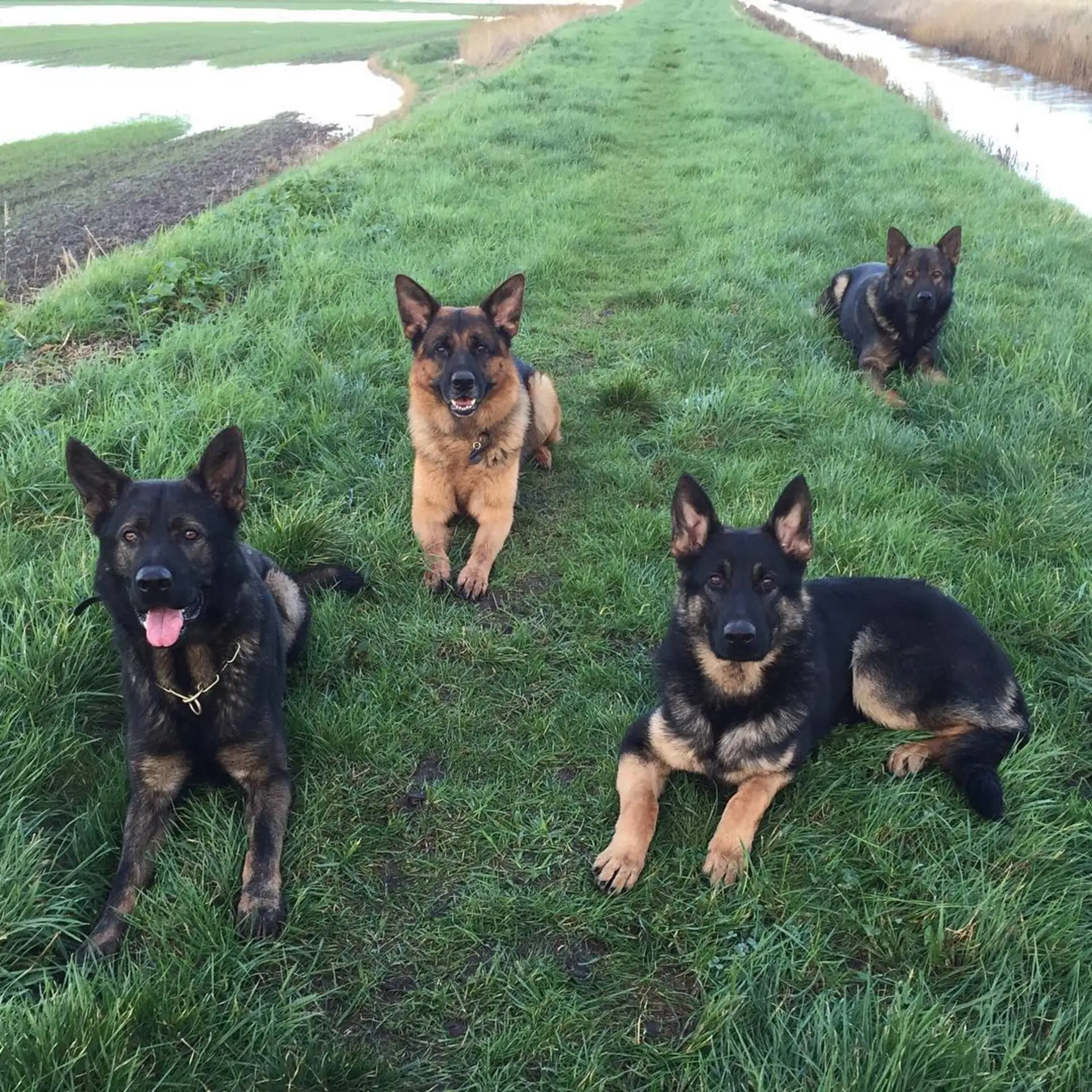
Choosing a protection dog is a serious family decision. The right dog should bring reassurance, confidence and companionship, not stress or uncertainty. For most families, the priority is not aggression. It is control, temperament, obedience and safe integration into everyday life.
At Link K9, based in Formby, Merseyside, we have worked with families, individuals and business owners since 2002. Founder Rory Larsen personally trains every dog, ensuring consistent standards and prioritising quality over volume. We work with clients across the Liverpool City Region, throughout the UK and, where appropriate, internationally.
What Is a Family Protection Dog?
A family protection dog lives safely within the home and provides controlled protection when needed. This makes it different from a traditionally trained guard dog, which often focuses mainly on deterring or reacting to threats.
Family protection dogs should be able to:
- Stay calm in everyday situations
- Respond reliably to clear commands
- Live safely around family routines
- Accept visitors when introduced correctly
- Act only when a genuine threat is present
- Stop immediately when instructed
This balance matters. A suitable dog should feel like part of the family first, with protection as a controlled skill rather than an uncontrolled behaviour.
Is a Protection Dog Right for Your Family?
A personal protection dog is not suitable for every home. These dogs need structure, consistency and owners who understand the responsibility involved.
A protection dog may be worth considering if you:
- Want an added layer of home security
- Travel often or live in a more isolated location
- Want a companion as well as a deterrent
- Can commit to training, exercise and routine
- Are prepared to follow professional guidance
If your home is very unpredictable or no one can commit to the dog’s ongoing care, another security option may be better.
A careful consultation should always come before choosing a dog. At Link K9 in Formby, Merseyside, we assess suitability before making any recommendations. This helps families decide whether a protection dog suits their home, lifestyle and level of experience.
Important Factors to Consider When Choosing a Protection Dog
The right protection dog should match your family, property and lifestyle. Looks and breed matter far less than temperament, training and suitability.
Key factors include:
- Temperament: The dog should be confident, balanced and clear-headed. Nervousness, poor social behaviour or uncontrolled drive can create problems.
- Obedience: A protection dog must respond reliably to commands. Control is more important than intensity.
- Family integration: The dog should be comfortable in normal family life, including calm time in the home, visitors, vehicles and outdoor settings.
- Handling ability: Some dogs need experienced handlers. Others suit families who are new to protection dogs but committed to guidance.
- Assessment: A professional protection dog assessment helps identify whether a dog has the right qualities for protection work.
We can also assess an existing dog’s suitability and advise whether protection training, obedience work or another route is more appropriate.
Popular Protection Dog Breeds and Their Characteristics
Breed can influence suitability, but the individual dog matters most.
A German Shepherd protection dog is often valued for loyalty, intelligence and trainability. With the right breeding, socialisation and training, German Shepherds can suit family environments well.
A Belgian Malinois protection dog can be highly driven, agile and responsive. This breed often suits experienced handlers or active households that understand working dogs.
Other breeds may also be suitable, but no breed should be chosen on reputation alone. The dog’s nerve, stability, obedience and compatibility with family life are more important than appearance.
The Role of Training in Protection Dogs
Professional training is what separates a controlled protection dog from a risk.
Good protection dog training in the UK should focus on:
- Obedience
- Control under pressure
- Clear release commands
- Social stability
- Safe handling
- Family integration
- Appropriate deterrence
At Link K9, Rory personally trains every dog. This founder-led approach helps maintain consistency, quality and accountability across each stage of training.
Training should also continue after placement. Options such as consultation-first advice, residential dog training, one-to-one support and refresher training help owners build confidence and keep standards high.
Safety Considerations for Families
Safety must come first. A protection dog should never be encouraged to act without control.
Families should consider:
- How the dog behaves around children
- How visitors are introduced
- Where the dog rests in the home
- Who gives commands
- How the dog is managed in public
- How routines are maintained
UK law requires owners to keep dogs under control in public and private places, including the owner’s home. The law applies to all dogs, not only certain breeds.
This is why proper training, responsible handling and ongoing support are essential.
Costs and Long-Term Commitment
Elite protection dogs in the UK require significant time, experience and care before they are ready for family life. The cost reflects breeding, raising, training, socialisation, assessment and ongoing support.
There are also long-term responsibilities, including:
- Food and care
- Veterinary treatment
- Insurance
- Equipment
- Training refreshers
- Time for exercise and structure
- Consistent handling from the family
A protection dog should be viewed as a long-term family and security commitment, not a quick purchase.
Questions to Ask Before Choosing a Protection Dog
Before making a decision, ask practical questions:
- Who has trained the dog?
- Has the dog been raised around family life?
- What assessment has been carried out?
- How does the dog behave around children, pets and visitors?
- What support is available after placement?
- Can the trainer explain the dog’s strengths and limits clearly?
- Is the dog suitable for your experience level?
- What happens if your needs change?
At Link K9 in Formby, Merseyside, we work with clients across the Liverpool City Region, across the UK and, where relevant, internationally. We prefer a careful discussion first, so the advice fits the person, family and environment.
Common Mistakes to Avoid
Avoid choosing a dog based only on size, appearance or breed.
Other common mistakes include:
- Looking for aggression rather than control
- Underestimating daily responsibility
- Ignoring children or pets in the decision
- Choosing a dog without a proper assessment
- Failing to plan ongoing training
- Treating the dog as security equipment rather than a living animal
The right protection dog should make the home feel calmer, not more complicated.
Making the Right Final Decision
Choosing the right protection dog starts with honest advice. A suitable dog should be safe, stable, trainable and appropriate for your home.
At Link K9, our approach is built around quality and control over volume. Since 2002, Rory Larsen has personally trained each dog, with a focus on temperament, early socialisation, family integration and long-term support.
Whether you are looking for elite protection dogs in the UK, advice on your current dog, or structured Formby, Merseyside, dog training, the first step should always be a careful assessment of need, suitability and responsibility.
A protection dog can be a valuable companion and deterrent, but only when chosen for the right reasons and supported in the right way.